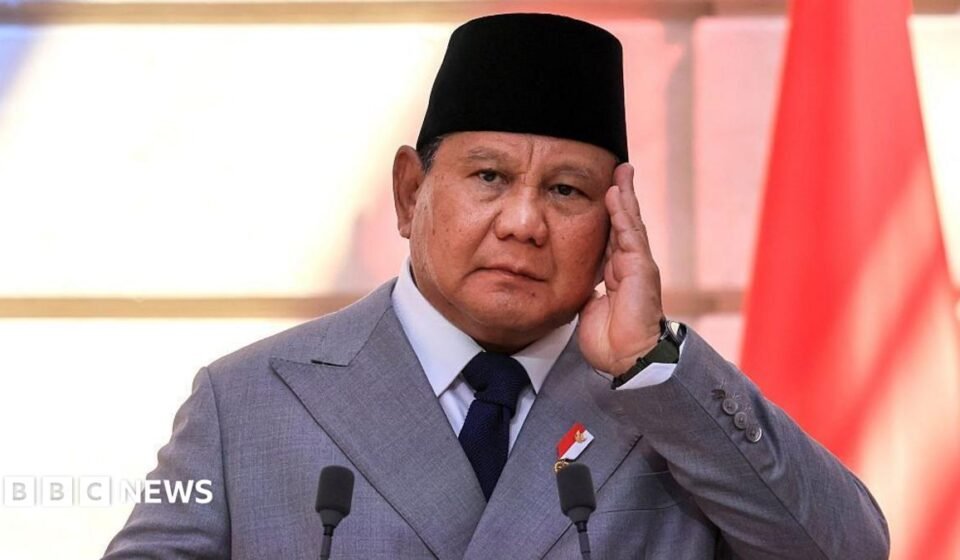

Jokowi had thrown his support behind Prabowo in the lead-up to the 2024 presidential election, as part of an alliance that ultimately propelled Prabowo to become Indonesia’s next leader.
Riding to victory with him was Gibran Rakabuming Raka, Jokowi’s eldest son, who became Indonesia’s vice president.
Two years on, that alliance appears to be fracturing – even if neither party has confirmed the rift.
Since taking the presidency, Prabowo has shown little interest in pushing ahead with Jokowi’s legacy project: the construction of Nusantara, a new capital. Instead, he has focused much of the state’s resources on his own flagship programme to provide free school meals across the country.
In a series of personnel reshuffles over the past year, Prabowo has also shifted many of Jokowi’s allies into new roles, including long-serving finance minister Sri Mulyani Indrawati.
Meanwhile, uncertainty also looms over Gibran, Jokowi’s son, who is mired in a growing controversy over the validity of his high school credentials, a pre-requisite to run for vice presidency. He now faces calls to be disqualified from his job, on the grounds that he should not have been eligible as a candidate.
The wiretapping scandal and subsequent arrest of Listyo – who rose to the top of the police force in Jokowi’s administration, and is seen as one of the ex-president’s longtime allies – is now adding to the tensions between Prabowo and Jokowi.
When asked about the wiretapping incident after the court session on Thursday, Jokowi told reporters that “we should all respect the ongoing legal process”.
This latest scandal comes during a particularly turbulent period in Prabowo’s presidency. His flagship free school meals programme is struggling for funding, parts of Indonesia have recently battled the country’s worst wildfires in a decade, and the national stock market faces crisis amid allegations of widespread market manipulation.
Experts, meanwhile, say all this has distracted from the more pressing challenges that Indonesians are facing on the ground – from economic uncertainties to environmental pollution.
In recent months, protesters have taken to the streets to pressure the government on a range of issues such as toxic wildfire haze, corruption, and cost-of-living woes.
“It’s like we’re living in a country on autopilot,” Nicky Fahrizal, a researcher at the Centre for Strategic and International Studies in Indonesia, told BBC Indonesian.
“Because the way the government operates proves that it’s not the people’s interests that are being pursued, but rather the interests of individual groups.”