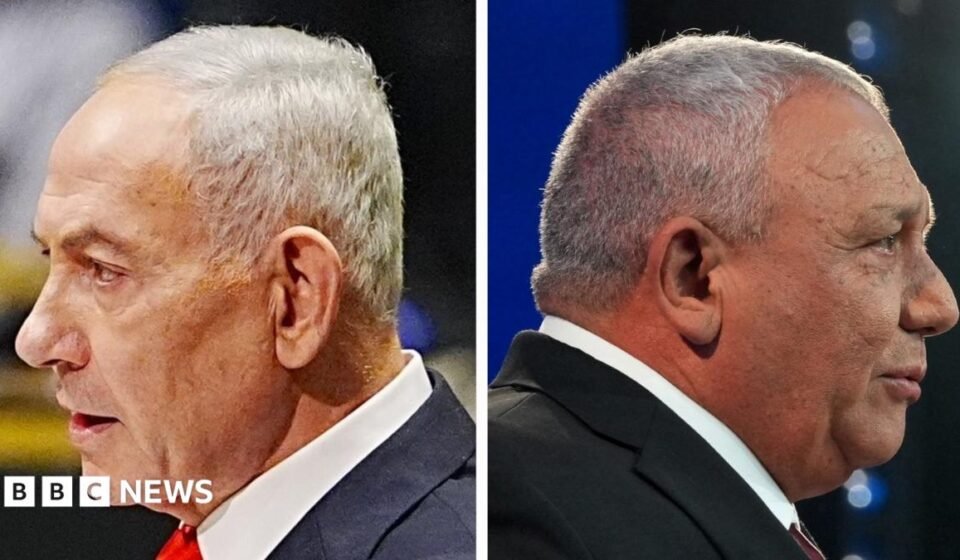

How these vastly diverging views coalesce into some form of government is now the unenviable task facing Israel’s body politic – the choices and compromises they may have to make could involve fundamental decisions about the country’s future.
Would Netanyahu be ready to abandon his religious allies and form a coalition with right-wingers from the opposition bloc? Would they be ready to swallow their hostility towards the prime minister and sit in his government?
Is the opposition bloc ready to abandon much of its campaign promises and co-operate with Arab parties to force Netanyahu out of office? Are the Arab parties ready to risk joining a government that could fall within months?
Yair Golan, the left-wing Democrat leader, urged the opposition bloc to form a partnership with Arab parties. “We must no longer accept Netanyahu’s racist division between Jewish votes and Arab votes,” he said.
But are the people of Israel ready for such a reality?
Amit Segal, an Israeli commentator sympathetic towards Netanyahu, said the high turnout among Arab Israeli voters “reminded Jews on both sides that, after years of division, they may have to learn to sit together after all”.
The risk is that this election, instead of putting Israel on a new path, has instead raised further doubts about what it is that unites its citizens. What are the common factors that bind this complex, varied collection of peoples into one polity?
Autocratic governments, which are growing in number, have long criticised democracies for producing weak and temporary governments, often fragile coalitions that struggle to hold together, let alone deliver what the people wanted.
Israel may now struggle for months to form a government. It might even fail and have to hold another election.
President Herzog acknowledged this risk head on as he prepared to open coalition negotiations: “We must do everything we can, certainly after yesterday, to avoid another round of elections.”
For years, Israel has focused on defending itself against its external enemies. But must it also now be ready to defend itself from perils within, if the divisions writ large by this election become unmanageable?
In another speech, Churchill once said democracy was not just “insurance against dangers from abroad”. It was also, he added, “insurance against dangers scarcely less grave and much more near and constant which threaten us here at home”.
Can Israel’s democracy live up to this challenge?